Free help center for adults 18+

How can we help you sell feet pics online?

Read 48 plain answers about getting set up, staying private, taking photos, pricing, buyers and scams. No sign-up and nothing to buy.

Most asked

The questions new sellers ask first

All 48 answers

Browse by topic

Pick the part you are stuck on

Answer library

Every answer, sorted by topic

Open any question to read the answer. Nothing is hidden behind a sign-up.

Getting set up

What you need before a first listing: the right age, a separate identity, one place to sell and a small first set.

What do I need before I can sell feet pics online?

Less than most people expect. You need to be at least 18, a phone with a decent camera, a room with a window, and an email address used for nothing else. Most selling sites also ask for a government ID to confirm your age, plus a bank account or payout method in your own name. You do not need a following, a studio or paid courses. What takes real effort is the planning: a stage name, a clear idea of what you will and will not shoot, and an hour spent reading the rules of the site you pick.

How do I choose where to sell?

Start from how you want to work, then find a site that fits. Three questions help. Who brings the buyers: the site, or you through your own promotion? What does it cost: a joining fee, a monthly plan, a cut of each sale, or a mix? How does money reach you, and what is the smallest amount you can withdraw? Read the fee page, the payout page and the content rules before you sign up, because these change and no outside summary stays right for long. Pick one site, learn it well, and add a second only once the first feels easy.

Do I need a big social media following to start?

No. Marketplaces built around this kind of content have buyers who browse and search on the site itself, so a clear profile and steady uploads can be enough to get noticed. A following helps most on subscription pages, where almost every buyer arrives through your own promotion. If you do promote on social media, open fresh accounts under your stage name and never use your personal ones. Growth without an audience tends to be slow, so judge your progress over a couple of months and not over your first few days.

How long does it take to make a first sale?

There is no honest fixed answer. Some sellers hear from a buyer in their first week, and others wait a month or longer. A few never sell at all. What you control is how ready your profile looks: a short, friendly bio, a handful of sharp photos, clear prices and quick, polite replies. Uploading a little every few days works better than one large batch followed by silence. Set a review date about eight weeks out. If nothing has moved by then, change your photos, your prices or the site before you give up.

What should my seller profile say?

Keep it short, warm and specific. Give your stage name, the kind of sets you make, such as bare feet, socks, heels or painted nails, and how custom requests work. State your limits plainly, for example no face, no meet-ups and no payments away from the site, so buyers know the rules before they message you. Leave out your real first name, your city, your job, your school and anything else a stranger could search for. Proofread it once. A tidy profile tells buyers you will be easy to deal with.

How much time does this take each week?

Plan for a few hours while you are setting up, then a steady routine. A simple pattern is one shoot a week that gives you several sets, plus ten to twenty minutes most days for replies and uploads. Messages eat more time than photos, so decide in advance when you answer them and stick to it. If it starts pushing into your job, studies or sleep, cut back. Selling works best as a small, organised side project, and it is fine to pause or stop whenever it no longer suits you.
Read "Getting set up" on one page

Staying private

How to keep your name, face, location and personal accounts apart from your seller profile.

Can I sell feet pics without showing my face?

Yes, and many sellers never show it. A feet picture needs your feet in the frame and nothing else. Before you sign up, check the rules of the site you choose, since a few ask for a face photo as part of identity checks. That photo goes to the site for verification and is not shown to buyers, but read exactly how it is stored. In your own photos, crop above the knee if you want extra distance, and look at every image for mirrors, windows, glossy tiles and screens that could reflect you.

What can give away who I am in a photo?

More than you would guess. Tattoos, scars, birthmarks and distinctive jewellery can be recognised by people who know you. Backgrounds matter as well: a unique rug, a view from a window, post on a table, a pet, or furniture that appears on your personal social media. Reflections in mirrors and screens are an easy thing to miss. Shoot against a plain sheet or wall, cover or edit out marks you do not want seen, and study each picture at full size before you upload it. If something makes you hesitate, shoot it again.

Should I use my real name anywhere?

Only where the law or the site needs it. Identity checks and payouts use your legal name, and that stays between you and the site. Everything a buyer sees should carry a stage name: your profile, your username, your messages and any watermark. Pick a name with no link to your real one, your nicknames or usernames you have used before. Search for it first to make sure it does not already belong to another person. Never sign a message with your own name, even to a buyer you have known for months.

Do I need a separate email address and phone number?

A separate email address, yes. Create a new one with your stage name and use it only for selling, so a leak or a nosy contact never leads back to your main inbox. Turn on two-step sign-in for that email and for your seller account. A separate phone number is rarely needed, because you should not be giving buyers a number at all. Keep conversations inside the messaging system of the selling site. If a site wants a number for security codes, that is between you and the site and is not shown on your profile.

Do photos carry hidden location data?

They can. Phones often save the time, the device model and sometimes GPS coordinates inside each image file. Many selling sites remove this data when you upload, but do not depend on it. Switch off location tagging for your camera app, or run finished files through an editor or metadata remover before you send them. This matters most for anything delivered directly to a buyer, such as a custom set sent as original files. Checking takes seconds: open the file details on your phone or computer and look for a location field.

What if someone I know finds my profile?

Decide your response before it happens, so you are not caught off guard. With no face, no real name and a neutral background, most profiles cannot be tied to a person with any certainty, and you are not obliged to confirm anything. Many sites let you block specific countries or regions from seeing you, which lowers the odds of being found by people nearby. If someone tries to use the discovery to pressure or threaten you, do not negotiate. Save the messages, block them, and report it to the site and, if needed, the police.

Read "Staying private" on one page

Taking photos

Light, angles, grooming, backgrounds and editing for clear feet pictures made with a phone.

Is a phone camera good enough?

For nearly everyone, yes. Recent phones take sharp, detailed pictures in good light, and that is what buyers look at. Wipe the lens, use the main rear camera in place of the selfie camera, and tap the screen to focus on your feet. Hold still or lean the phone against something solid. A small tripod with a remote shutter or a timer makes solo shooting far easier and costs very little. Save your money on a dedicated camera until you have regular buyers and a clear reason to upgrade.

What lighting works best at home?

Daylight from a window. Set up beside the window, not in front of it, on a bright day with no direct sun falling on your skin. Soft, even light shows skin tone and nail colour accurately and hides very little, which is what you want. Turn off ceiling lights so you do not mix warm and cool tones. If you shoot after dark, place one lamp behind a thin white curtain or bounce it off a wall. Skip the phone flash. It flattens everything and adds hard shadows.

Which angles and poses should a first set include?

Aim for variety that is simple to repeat. A solid starter set covers tops of the feet, soles, arches from the side, toes close up, and one wider shot that shows both feet in a relaxed position. Change one thing between frames: point, flex, cross your ankles, or go up on your toes. Take many more pictures than you plan to use and keep only the sharpest. Over time, buyer requests will show you which angles are popular with your audience, and you can build future sets around those.

How should I get my feet ready for a shoot?

Clean, moisturised and neat is the standard. Wash and dry your feet, file your nails to an even shape, and tidy the cuticles. Use lotion about ten minutes before you shoot so skin looks healthy without shining. Polish is optional, but chipped polish shows badly in close-ups, so redo it or remove it. Check your soles for lint and sock marks. Give tight shoes and socks a rest for half an hour beforehand so pressure lines can fade. Small details like these are what separate an ordinary photo from one that sells.

What makes a good background?

Plain and tidy beats fancy. A white sheet, a wooden floor, a soft blanket or a clean bath edge all work, because they keep attention on your feet. Stick to two or three colours in the frame and remove anything that does not belong, such as cables, laundry and cups. Texture adds interest: knitted throws, sand, grass or tiles each give a different mood without much effort. Before you commit to a spot, take one test shot and look at the edges of the frame, where clutter and personal items tend to hide.

Should I edit or filter my photos?

Edit lightly. Straighten the frame, crop out clutter, lift the brightness a little and correct the colour if the image looks too yellow or blue. That is usually all a picture needs. Heavy filters, smoothing and reshaping tools make skin look unreal, and buyers who order a custom set later will notice the difference. Use one consistent style across a set so it feels like it belongs together. Always edit a copy and keep the original file, in case a buyer asks for a different crop or a higher resolution.

Read "Taking photos" on one page

Pricing and getting paid

Setting prices, understanding fees, getting money out safely and keeping records.

How much should I charge for feet pics?

There is no standard price, and anyone who quotes you a guaranteed rate is guessing. Look at what sellers with a similar style charge on the site you use, then start near the lower middle of that range while you have no reviews. Price custom work higher than ready-made sets, because it takes your time and is made for one person. Raise prices in small steps once orders are steady. If buyers message often but rarely purchase, your price or your previews may be the reason, so adjust one of them and watch what changes.

What fees come out of a sale?

It depends on the site, and the differences are large. Some charge a monthly or yearly seller fee. Others take a percentage of every sale. Some do both, and payment processing or withdrawal fees can be added on top. Before you list anything, work through one example: if a buyer pays a set amount, how much reaches your bank after every deduction? Use the fee and payout pages of the site itself for this, since they are the only source that stays current. Then build that cut into your prices so it does not come as a surprise later.

How do I get paid without exposing my details?

Use the payout system built into the selling site. The buyer pays the site, the site pays you, and the buyer never sees your legal name or bank details. Problems begin when payment moves to personal payment apps or direct bank transfers. Many of those show your real name to the sender, and some payments can be reversed after you have delivered the photos. If a buyer pushes for a method outside the site, treat it as a warning sign and decline politely. Convenience for them is not worth the risk for you.

Do I have to pay tax on what I earn?

In most countries, money earned from selling photos counts as income, and you are expected to report it once you pass the local thresholds. The details differ a great deal from place to place, so read the guidance your tax authority publishes on self-employed or side income, or ask an accountant. From day one, keep a simple spreadsheet with the date, the amount received, the fees deducted and any costs such as props or site subscriptions. Good records make filing easy. This is general information and not tax advice.

Should I sell single photos, sets or subscriptions?

Each suits a different stage. Single photos are easy to list but earn little per sale. Sets of five to ten related pictures give buyers better value and you a better return for one shoot. Subscriptions bring steadier income, yet they only work if you can post on a reliable schedule and already have people who want to follow you. Custom requests usually pay the most per picture and take the most time. A sensible path is sets first, customs once you have a few buyers, and subscriptions only when demand is consistent.

What is a chargeback and can I prevent one?

A chargeback happens when a buyer asks their bank or card company to reverse a payment after the purchase. If it succeeds, the money is taken back, sometimes with an added fee. You cannot remove the risk completely, but you can shrink it. Sell through sites that process payments themselves and state how disputes are handled. Avoid direct payments from strangers. Deliver only after a payment shows as completed, and keep the order messages as a record. Be extra careful with unusually large first orders from brand new accounts.

Read "Pricing and getting paid" on one page

Talking to buyers

Messages, custom requests, boundaries and what to do when a chat turns uncomfortable.

How do I handle custom requests?

Treat each one like a small order. Ask what the buyer wants in plain terms: how many photos, which angles, what props or nail colour, and when they need it. Reply with a price and a delivery time, and begin only after payment has cleared through the site. Send exactly what was agreed. If a request falls outside your limits, say so kindly and offer something you are comfortable with. Clear terms at the start prevent most disputes, and buyers tend to return to sellers who are organised and polite.

What should I do when a buyer asks for free samples?

Say no, in a friendly way. Your profile previews already show the quality of your work, and that is all a genuine buyer needs. People who press for free pictures seldom turn into paying customers, and anything you send can be saved and passed around. A short reply does the job: thank them for the interest, point to your preview images, and name the price of your smallest set. Then stop there. You do not owe anyone a debate, and you can end the chat if they keep pushing.

How do I set boundaries without losing buyers?

State them early and calmly, and most buyers will respect them. Put your limits in your profile, then repeat them in one line when a request crosses them. Something like "I don't offer that, but I can do this" keeps the tone warm and the door open. You never have to explain or justify a limit. Buyers who leave because you said no were not customers you wanted. Those who stay know what to expect, which makes every later order quicker and more comfortable for both of you.

A buyer wants to chat on another app. Should I?

It is safer to stay where you are. Messages on the selling site are tied to the account of the buyer, covered by the rules of the site and visible to its support team if something goes wrong. Once you move to a private messaging app, you lose that protection and may reveal a phone number, a username or a profile photo linked to your real life. Scammers ask to switch apps for exactly that reason. Tell the buyer you only talk and trade on the site. Real customers accept that without an argument.

What do I do if a buyer is rude or makes me uncomfortable?

You can end any conversation at any time. One clear message is enough, for example "I'm not comfortable with this, so I'll end our chat here." After that, use the block and report tools without waiting to see if things improve. Take screenshots first in case the support team asks for them. Do not respond to insults, guilt or threats, because a reaction is often the goal. No sale is worth feeling unsafe. If a threat involves your identity or your safety, report it to the site and to local police.

How quickly should I reply to messages?

Within a day is a good standard, and faster while a buyer is actively deciding. You do not need to be available around the clock. Pick one or two set times a day for messages and mention your usual reply time in your profile, so nobody expects an instant answer. Short saved replies for common questions, such as prices, what a set includes and how customs work, cut the time spent typing. Being consistent matters more than being quick: buyers come back to sellers who answer reliably.

Read "Talking to buyers" on one page

Avoiding scams

The tricks aimed at new sellers, the warning signs they share and what to do if you are caught out.

What are the most common scams aimed at feet pic sellers?

Most follow a few patterns. An overpayment scam sends more than the agreed price and asks you to refund the difference before the original payment bounces. An advance fee scam asks you to pay a small "verification" or "unlock" charge to receive a large payment. Gift card scams offer codes that turn out to be used or fake. Phishing messages send a link to a copy of a login page to steal your password. Fake "agents" promise buyers in exchange for an upfront fee. Every one of them moves the deal away from the payment system of the site.

A buyer says I must pay a fee before they can pay me. Is that real?

No. It is one of the oldest tricks there is. Money moves from the buyer to you, never the other way. No genuine buyer needs you to cover a transfer fee, a verification charge, a tax or an account upgrade so their payment can go through. The reasons given often sound official and urgent, and may arrive with screenshots of a pending transfer. Those images are easy to fake. Do not send anything, do not click links in the message, and block and report the account.

Are payments by cheque or gift card safe?

Treat both as unsafe. A cheque can appear in your balance and then be reversed days later when the bank finds it is fake, after you have already delivered the photos or refunded an "overpayment". Gift card codes can be stolen, already spent or cancelled, and you have almost no way to dispute them. Both methods are popular with scammers because they are hard to trace. The safe route is dull but dependable: the buyer pays through the selling site and you deliver once the payment is confirmed there.

How do I know if a selling site is legitimate?

Check a few things before you hand over any ID or money. A real site has clear terms, a privacy policy, published fees and a way to contact support. It processes payments itself and explains how payouts and disputes work. Search the name of the site with the words "scam" and "reviews", and read what sellers say on independent forums, keeping in mind that single reviews can be wrong in either direction. Be wary of sites that promise fixed earnings, charge large upfront fees or rush you to sign up through a private message.

What should I do if I have been scammed?

Act quickly and do not blame yourself. Stop all contact with the scammer. Take screenshots of the profile, the messages and any payment details. Report the account to the selling site, and contact your bank or payment provider right away if you sent money or shared card details. Change your passwords if you clicked a link or typed login details anywhere. You can also report fraud to the consumer protection or cybercrime service in your country. Be careful with "recovery" services that contact you afterwards, since many of those are scams too.

Do watermarks stop people from stealing my photos?

They help, but they do not make theft impossible. A watermark with your stage name across preview images makes them less useful to anyone who wants to resell or repost them, and it tells buyers where the picture came from. Place it over part of the foot, not in a corner where it can be cropped away. Send clean versions only after payment. If your work appears somewhere without permission, most sites and hosts have a copyright complaint process, and the original files on your device help prove the pictures are yours.

Read "Avoiding scams" on one page

Rules and age limits

Age rules, the law, site terms and who owns the pictures you sell.

Is it legal to sell feet pics?

For adults, selling pictures of your own feet is legal in many countries, but not everywhere, and the rules are not the same in each place. Some countries restrict or ban selling content that could be classed as adult material, even when it is not explicit. Your local law applies to you wherever the site is based. Search for the rules on adult content and online selling where you live, and read the terms of the site you plan to use. This answer gives general information and is not legal advice.

How old do I have to be?

At least 18, and older in places where the age of majority is higher. This is not flexible. Reputable sites confirm age with a government ID before you can list anything, and trying to get around that check breaks both the rules of the site and the law. If you are under 18, this is not something you can do, and no workaround makes it safe or legal. Everything on this website is written for adults only.

Why do selling sites ask for my ID?

Age and identity checks protect everyone involved. They keep minors off the platform, make it harder to sell stolen images of another person, and meet the legal duties that payment companies place on sites handling this kind of content. Your ID is usually checked by the site or a verification company it hires, and it is not shown to buyers. Before uploading, read the privacy policy to see who processes the document and how long it is kept. A site selling this kind of content with no age check at all is one to avoid.

Who owns the photos after I sell them?

In most cases you keep the copyright, and the buyer receives a copy for personal viewing. A normal sale does not hand over the right to repost, resell or use the picture in advertising. The exact terms come from the site you sell on, so read its section on content ownership and licensing. If a buyer asks for exclusive rights or commercial use, that is a separate deal and should be priced far higher and put in writing. When unsure, say in your listing that images are for personal use only.

What kinds of content are not allowed?

Every site publishes its own list, and you agree to it when you join. Common bans include anything involving a person under 18, content showing someone who has not consented, and pictures you did not take or do not have rights to. Many sites also limit how explicit content may be, and some allow none at all. Break these rules and you can lose your account along with any unpaid balance. Read the content policy once before your first upload, and again whenever the site emails you about changes.

Can I sell if I live outside the country where the site is based?

Often yes, but check three things first. Does the site accept sellers from your country? Can it pay out to a bank or payment service you can actually use, in a currency that works for you? And does your own country allow this kind of selling? Look for a supported countries list in the help pages, or ask the support team before you verify your ID. Remember that currency conversion and international transfer charges can take a slice of each payout, so include them when you set prices.

Read "Rules and age limits" on one page

Growing repeat buyers

Turning one-off orders into regulars through consistency, good service and steady habits.

How do I turn a first-time buyer into a regular?

Do the simple things well. Deliver on time, send exactly what was ordered and thank the buyer afterwards. A short follow-up a week or two later, mentioning a new set close to what they bought, is welcome when it is occasional and relevant. Remember preferences such as a favourite nail colour or angle and offer them without being asked. Regulars tend to return because the first order went smoothly and felt personal. Discounts play a much smaller part than reliability does.

How often should I post new content?

Often enough that your profile always looks active, and at a pace you can sustain for months. For most people that means a few new pictures or one new set each week. A regular rhythm beats bursts, because buyers who check back and find something new learn to keep checking. Shooting several sets in one session and releasing them gradually makes this far easier. If you need a break, say so in your profile, so returning buyers know you have not disappeared.

Is it worth offering bundles or discounts?

Bundles, usually yes. Grouping several sets at a modest saving raises the size of an order without lowering the value of your single sets. Discounts need more care. Frequent sales teach buyers to wait for the next one, and very low prices can attract people who haggle over everything. A small thank-you offer for returning customers, or a limited bundle when you release a new theme, tends to work better than cutting prices across your whole profile. Try one offer at a time so you can see what it does.

How can I promote my profile without revealing who I am?

Use accounts made only for your seller identity. Open them with your selling email, your stage name and a profile image that does not show your face. Do not follow friends, family or colleagues from them, and do not log in to personal and seller accounts in the same app if it suggests contacts to each other. Post previews that follow the content rules of each platform, and send people to your profile on the selling site and not to a private chat. Check your privacy settings now and then, because apps change their defaults.

What do buyers value most in a seller?

Reliability comes first. Buyers want clear pictures that match the description, delivery when promised and a seller who replies politely. After that comes consistency: a recognisable style, steady uploads and prices that do not jump around. A little personality helps as well. A friendly tone and remembering what a returning buyer likes make an ordinary purchase feel looked after. None of this needs expensive equipment. It depends on habits you can build in your first month and keep for as long as you sell.

How do I know what is working?

Keep simple notes. Each week, write down which sets sold, what they showed, what you charged and where the buyer found you, if the site tells you. After a month or two, patterns appear: a certain angle, colour or theme sells more, or one price point converts better than another. Make more of what sells and quietly retire what does not. Change one thing at a time, so you can tell what made the difference. Guessing is tiring, and a small record replaces it with evidence.

Read "Growing repeat buyers" on one page

New here?

Start in five moves

The short version of the whole process. Each move has a longer walk-through in the guide.

  1. Check you are allowed

    You must be 18 or older. Look up what your country says about selling adult content online before anything else.

  2. Build a separate identity

    Pick a stage name and open a new email address for it. Nothing buyers see should point to your everyday life.

  3. Choose one place to sell

    Read its fee page, payout page and content rules from top to bottom. One site is plenty to begin with.

  4. Shoot a small first set

    Clean feet, window light, a plain background and about ten sharp photos. A phone does the job.

  5. List it and stay on the site

    Set a fair price, reply politely, and keep every message and payment inside the site you sell on.

Swipe sideways to see all five.

Read the full getting started guide
Person in grey joggers and white socks sitting on a bed and typing on a phone

Privacy checklist

Sort out your privacy before the first photo

Your face is optional. A privacy plan is not. Tick off each line before you upload anything, because a photo cannot be taken back once a buyer has it.

  • A stage name with no link to your real name, nicknames or old usernames.
  • A new email address used only for selling, with two-step sign-in turned on.
  • Location tagging switched off in your camera app.
  • Tattoos, scars and jewellery covered or cropped out of every shot.
  • No mirrors, windows, post or screens in the background.
  • Every chat and every payment kept inside the site you sell on.

Photo basics

A phone and a window are enough

No studio, no ring light and no expensive camera. These five habits do most of the work in a clear, sharp set.

Light
Sit beside a window in soft daylight. Turn off ceiling lights and skip the flash.
Background
A plain sheet, floor or blanket, with two or three colours at most and no clutter.
Grooming
Clean, moisturised feet, evenly filed nails and no sock marks or chipped polish.
Angles
Tops, soles, arches, toes close up and one relaxed wide shot of both feet.
Editing
Straighten, crop and brighten a copy. No heavy filters, smoothing or reshaping.
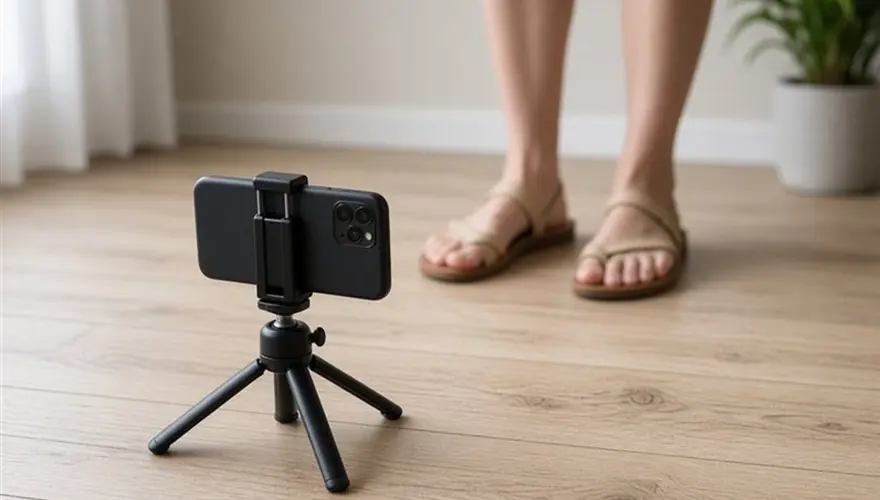
Phone on a small tripod set up on a wooden floor, with sandalled feet out of focus behind it

Quick facts

Six plain truths before you begin

  • You must be 18 or older. There are no exceptions and no workarounds.

  • Nobody can promise you an income. Some sellers earn a little, some earn nothing, and results vary widely.

  • A real buyer never asks you to pay first. Money moves from the buyer to you. It never moves the other way.

  • Your face is optional. A privacy plan is not. Decide what stays hidden before you shoot.

  • What you earn is usually taxable. Keep a simple record of every payment from the first day.

  • This site sells nothing. No courses, no sign-up, no paid placements. The answers are free to read.

From the blog

Latest longer reads

The first posts are being written

Longer guides will show up here once they are published. The step-by-step guide is ready now.

Open the getting started guide

Still stuck? Ask us

If the library does not cover your question, send it over. We read every message, and questions that would help other readers get added to the site.

Hands holding a phone with a chat conversation open on the screen